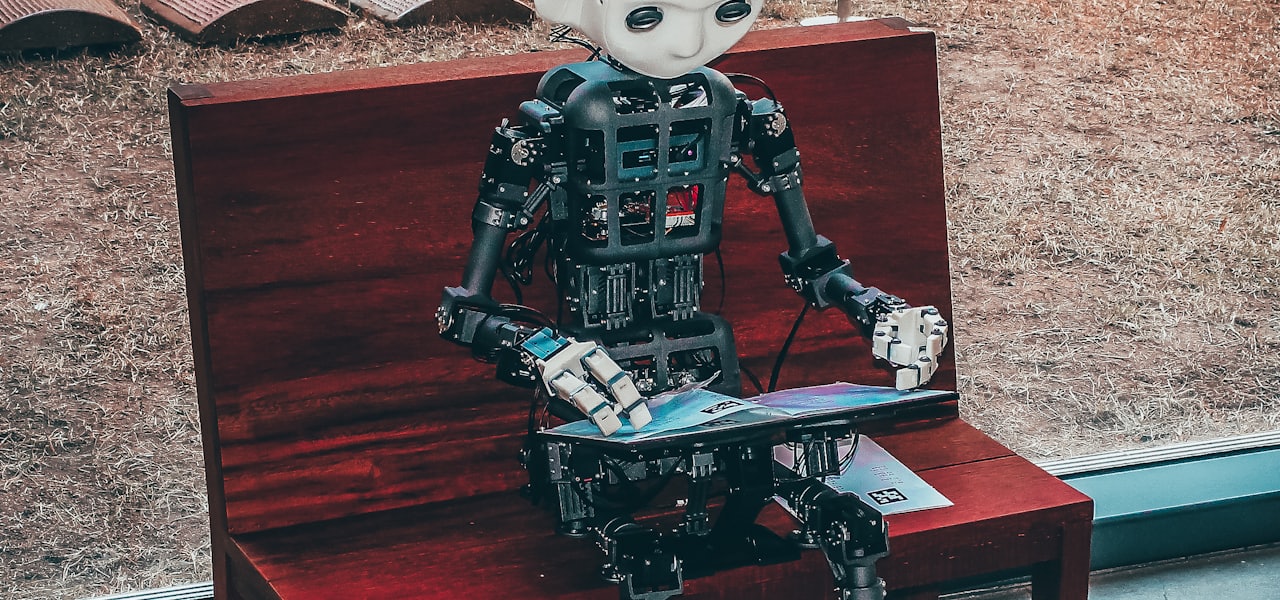
Artificial intelligence in customer experience is the use and development of artificial intelligence (AI) to aid and improve customer experience (sometimes abbreviated to CX AI). Chatbots are often seen as the first step in the development of AI within the industry, but more tailored offerings are slowly becoming available. The use of artificial intelligence in the space has since become more diverse than simply chatbots, with AI underpinning entire CX cloud platforms now used at major corporations. Contact center as a service (CCaaS) has become a core solution of the CX (customer experience) industry, with the CCaaS market size expected to reach $17.19 Billion by 2030 in the United States alone. == History == As with many AI applications, CX AI early implementation case studies have demonstrated that AI can increase the quality of customer interactions and therefore the overall experience that organizations can provide. This in turn has suggested a higher return on investment and/or revenue as a result. The beginning of the revolution of customer experience and the use of machine learning was with chatbots. The use of this type of AI can be traced back to Alan Turing in 1950, when the Church–Turing thesis suggested that computers could use "formal reasoning" to reach conclusions. In 2017, Meta produced one of the first breakthroughs for everyday use of AI for customer experience when it allowed Facebook users to create their own messaging bots for free on its Facebook messenger platform. The main focus of this was to both automate and improve customer experience and interaction. In 2023, CCaaS vendors began announcing the integration of ChatGPT’s generative AI into their CX solutions. Generative AI adds a layer of semantics into AI outputs. This was a major breakthrough for conversational AI. Using natural language processing and conversational AI, chatbots could enhance the level of service they could provide, speaking to customers in an easy-to-understand and conversational tone. == Applications == Currently the main location for the application of CX AI in the sector is in contact centers. Historically, contact centers were simply known as call centers, but in recent years differentiation developed between the two terms. Call centers provide phone support, while contact centers also provide support via digital channels in addition to analogue phone systems. Contact centers are therefore seen as a complete customer service solution, where as call centers simply cover one aspect of customer interactions. As a part of improving CX, AI is also improving the employee experience. AI is able to automate tasks to free up time for contact center agents to focus on higher priority tasks. For example, AI can be used for auto summarization. This means that instead of human agents having to summarize customer interactions now AI can do it, saving organizations time and money.
Automated medical scribe
Automated medical scribes (also called artificial intelligence scribes, AI scribes, digital scribes, virtual scribes, ambient AI scribes, AI documentation assistants, and digital/virtual/smart clinical assistants) are tools for transcribing medical speech, such as patient consultations and dictated medical notes. Many also produce summaries of consultations. Automated medical scribes based on large language models (LLMs, commonly called "AI", short for "artificial intelligence") increased drastically in popularity in 2024. There are privacy and antitrust concerns. Accuracy concerns also exist, and intensify in situations in which tools try to go beyond transcribing and summarizing, and are asked to format information by its meaning, since LLMs do not deal well with meaning (see weak artificial intelligence). Medics using these scribes are generally expected to understand the ethical and legal considerations, and supervise the outputs. The privacy protections of automated medical scribes vary widely. While it is possible to do all the transcription and summarizing locally, with no connection to the internet, most closed-source providers require that data be sent to their own servers over the internet, processed there, and the results sent back (as with digital voice assistants). Some retailers say their tools use zero-knowledge encryption (meaning that the service provider can't access the data). Others explicitly say that they use patient data to train their AIs, or rent or resell it to third parties; the nature of privacy protections used in such situations is unclear, and they are likely not to be fully effective. Most providers have not published any safety or utility data in academic journals, and are not responsive to requests from medical researchers studying their products. == Privacy == Some providers unclear about what happens to user data. Some may sell data to third parties. Some explicitly send user data to for-profit tech companies for secondary purposes, which may not be specified. Some require users to sign consents to such reuse of their data. Some ingest user data to train the software, promising to anonymize it; however, deanonymization may be possible (that is, it may become obvious who the patient is). It is intrinsically impossible to prevent an LLM from correlating its inputs; they work by finding similar patterns across very large data sets. Some information on the patient will be known from other sources (for instance, information that they were injured in an incident on a certain day might be available from the news media; information that they attended specific appointment locations at specific times is probably available to their cellphone provider/apps/data brokers; information about when they had a baby is probably implied by their online shopping records; and they might mention lifestyle changes to their doctor and on a forum or blog). The software may correlate such information with the "anonymized" clinical consultation record, and, asked about the named patient, provide information which they only told their doctor privately. Because a patient's record is all about the same patient, it is all unavoidably linked; in very many cases, medical histories are intrinsically identifiable. Depending on how common a condition and what other data is available, K-anonymity may be useless. Differential privacy could theoretically preserve privacy. Data broker companies like Google, Amazon, Apple and Microsoft have produced or bought up medical scribes, some of which use user data for secondary purposes, which has led to antitrust concerns. Transfer of patient records for AI training has, in the past, prompted legal action. Open-source programs typically do all the transcription locally, on the doctor's own computer. Open-source software is widely used in healthcare, with some national public healthcare bodies holding hack days. === Data resale and commercialization === Several AI medical scribe providers include terms in their service agreements that allow the reuse, sale, or commercialization of de-identified or user-submitted data. Although such data are generally described as anonymized or aggregated, these practices have raised ethical concerns among clinicians and privacy advocates regarding secondary uses of medical information beyond clinical documentation. Freed, an AI transcription and scribe platform, states in its Terms of Use that it may "collect, use, publish, disseminate, sell, transfer, and otherwise exploit" de-identified and aggregated data derived from user inputs. OpenEvidence similarly states that it may "collect, use, transfer, sell, and disclose non-personal information and customer usage data for any purpose including commercial uses." Doximity, which offers an AI-enabled medical scribe as part of its physician platform, grants itself a "nonexclusive, irrevocable, worldwide, perpetual, unlimited, assignable, sublicensable, royalty-free" license to "copy, prepare derivative works from, improve, distribute, publish, ... analyze, index, tag, [and] commercialize" content submitted by users, subject to its privacy policy. Because these terms allow broad secondary use—including sale, licensing, model-training, derivative works, and commercial exploitation of de-identified or user-submitted data—some commentators have recommended that clinicians review data-handling provisions carefully when adopting AI-scribe tools, particularly in clinical environments where patient privacy and regulatory compliance are critical. === Encryption === Multifactor authentication for access to the data is expected practice. Typically, Diffie–Hellman key exchange is used for encryption; this is the standard method commonly used for things like online banking. This encryption is expensive but not impossible to break; it is not generally considered safe against eavesdroppers with the resources of a nation-state. If content is encrypted between the client and the service provider's remote server (transport cryptography), then the server has an unencrypted copy. This is necessary if the data is used by the service provider (for instance, to train the software). Zero-knowledge encryption implies that the only unencrypted copy is at the client, and the server cannot decrypt the data any more easily than a monster-in-the-middle attacker. == Platforms == Scribes may operate on desktops, laptop, or mobile computers, under a variety of operating systems. These vary in their risks; for instance, mobiles can be lost. The underlying mobile or desktop operating systems are also part of the trusted computing base, and if they are not secure, the software relying on them cannot be secure either. Some AI medical scribe platforms are designed to operate as cloud-based applications that generate structured clinical documentation from clinician–patient conversations. These systems may offer features such as real-time transcription, document generation, and integration with electronic health record (EHR) systems. == Confabulation, omissions, and other errors == Like other LLMs, medical-scribe LLMs are prone to hallucinations, where they make up content based on statistically associations between their training data and the transcription audio. LLMs do not distinguish between trying to transcribe the audio and guessing what words will come next, but perform both processes mixed together. They are especially likely to take short silences or non-speech noises and invent some sort of speech to transcribe them as. LLM medical scribes have been known to confabulate racist and otherwise prejudiced content; this is partly because the training datasets of many LLMs contain pseudoscientific texts about medical racism. They may misgender patients. A survey found that most doctors preferred, in principle, that scribes be trained on data reviewed by medical subject experts. Relevant, accurate training data increases the probability of an accurate transcription, but does not guarantee accuracy. Software trained on thousands of real clinical conversations generated transcripts with lower word error rates. Software trained on manually-transcribed training data did better than software trained with automatically transcribed training data such as YouTube captions. Autoscribes omit parts of the conversation classes as irrelevant. The may wrongly classify pertinent information as irrelevant and omit it. They may also confuse historic and current symptoms, or otherwise misclassify information. They may also simply wrongly transcribe the speech, writing something incorrect instead. If clinicians do not carefully check the recording, such mistakes could make their way into their medical records and cause patient harms. == Patient consent == Professional organizations generally require that scribes be used only with patient consent; some bodies may require written consent. Medics must also abide by local surveillance laws, which may criminalize recording pri
List of cryptosystems
A cryptosystem is a set of cryptographic algorithms that map ciphertexts and plaintexts to each other. == Private-key cryptosystems == Private-key cryptosystems use the same key for encryption and decryption. Caesar cipher Substitution cipher Enigma machine Data Encryption Standard Twofish Serpent Camellia Salsa20 ChaCha20 Blowfish CAST5 Kuznyechik RC4 3DES Skipjack Safer IDEA Advanced Encryption Standard, also known as AES and Rijndael. == Public-key cryptosystems == Public-key cryptosystems use a public key for encryption and a private key for decryption. Diffie–Hellman key exchange RSA encryption Rabin cryptosystem Schnorr signature ElGamal encryption Elliptic-curve cryptography Lattice-based cryptography McEliece cryptosystem Multivariate cryptography Isogeny-based cryptography
TikTokification
TikTokification (also written TikTok-ification) is a term used to describe the widespread adoption of TikTok's short-form, vertical video format and its algorithmic content-delivery model across the broader social media landscape. The phenomenon encompasses the strategic and cultural changes made by competing platforms such as Instagram, YouTube, Facebook, Snapchat, and LinkedIn in response to TikTok's global dominance. Beyond platform design, the term is also used more broadly to describe shifts in media consumption habits, advertising strategies, and, more critically, the potential cognitive and psychological effects associated with constant short-form video consumption. == Background == === Origins of short-form video === The short-form video format predates TikTok. Vine, launched in 2013, popularised six-second looping videos before shutting down in 2017. TikTok itself, known as Douyin in the Chinese market, was created by the Chinese technology company ByteDance in September 2016. Following its international expansion and its 2018 merger with Musical.ly, TikTok grew rapidly. By 2020, the application had surpassed two billion total downloads worldwide, with over 800 million monthly active users. A key driver of TikTok's success was its recommendation algorithm. The platform's "For You Page" (FYP) serves content to users based on behaviour rather than follower count, making it possible for unknown creators to achieve widespread reach organically. Analysts noted that TikTok serves "fast, visually engaging, and authentic videos that feel more like entertainment than advertising," fundamentally reshaping consumer expectations of digital content. TikTok has been described as "the center of the internet for young people," where users go for entertainment, news, trends, and shopping. As of the mid-2020s, TikTok had approximately 1.12 billion monthly active users. == Platform responses == TikTok's success compelled nearly every major social media platform to restructure its product around short-form video. In 2020, Instagram launched Reels and YouTube launched Shorts, both directly in response to TikTok's growth. Platforms like Meta's Instagram Reels and Google's YouTube Shorts subsequently expanded aggressively, launching new features, creator tools, and even considering separate standalone applications to compete. LinkedIn, traditionally a professional networking site, began experimenting with TikTok-style short-form vertical video feeds. Facebook launched a singular unified video feed combining Reels, long videos, and live videos, similar in structure to TikTok's feed. Snapchat redesigned its application to combine Stories and Spotlight into a unified entertainment feed. YouTube extended its Shorts format to allow videos up to three minutes in length, up from the previous limit of sixty seconds, as of October 2024. Despite these adaptations, experts noted that none of TikTok's rivals had matched its algorithmic precision as of mid-2025. == Societal and cultural impact == === Media and journalism === News organisations have also been affected by TikTokification. Short-form video grew rapidly as a format for news content, driven in large part by TikTok's popularity. According to Pew Research Center, 17% of adults in the United States reported regularly getting news from TikTok in 2024, with 63% of teenagers saying they used the platform as a news source. In response, major publishers began creating bespoke short-form content for TikTok's audience, with organisations such as the BBC building dedicated internal TikTok teams. === Advertising and commerce === TikTokification has had significant effects on the advertising industry. US social video advertising spending was projected to surpass linear television advertising spending for the first time in 2025. Global social commerce sales were projected to reach approximately $900 billion in 2025, with platforms like Douyin and TikTok driving a large share of that growth. TikTok itself generated an estimated $23.6 billion in advertising revenue in 2024. Short-form video has been described as bridging the gap between brand awareness and direct conversion. Surveys have found that consumers trust user-generated content 8.7 times more than influencer content and 6.6 times more than branded content, prompting brands to favour creator-led video formats. === Attention spans and cognitive effects === A growing body of research has examined the cognitive consequences of heavy short-form video consumption, a set of effects sometimes referred to as "TikTok Brain." A large systematic review and meta-analysis published in Psychological Bulletin, analysing data from 98,299 participants across 71 studies, found that the more short-form video content a person watches, the poorer their cognitive performance in attention and inhibitory control. The review also found that greater engagement with short-form video was associated with higher levels of anxiety, depression, and stress, as well as sleep disturbances. The platform's inherent demand for engaging content has resulted in the proliferation of sludge content, a genre of split screen video with the main video on the top and an unrelated attention-grabbing video on the bottom, typically repetitive gameplay (notably of the endless runner mobile game Subway Surfers) or oddly satisfying videos, designed to maximize viewer retention in cases where the main video may appear uninteresting and would normally cause the viewer to skip it. Sludge content is often described as overstimulating, reflecting and contributing to declining attention spans, though the scholarly evidence supporting such claims is not conclusive. Dr. Yann Poncin, associate professor at the Child Study Center at Yale University, noted that "infinite scrolling and short-form video are designed to capture your attention in short bursts," contrasting this with earlier entertainment formats that guided audiences through longer narratives. Research suggests that children and teenagers may be particularly vulnerable, with early exposure to rapid frame changes potentially conditioning the brain's neural pathways to require constant stimulation, making it more challenging to engage with slower-paced activities. A separate study published in Nature Communications by researchers at the Technical University of Denmark documented a notable decrease in collective attention span over time, attributing it in part to the increasing volume and pace of content production and consumption online. Researchers caution, however, that the majority of relevant studies are cross-sectional, meaning they capture data at a single point in time and cannot establish causality. It remains possible that individuals with pre-existing conditions such as anxiety or attention deficits may be more likely to engage heavily with these platforms as a coping mechanism. === Academic and sociological analysis === Scholars have framed TikTokification within the context of the attention economy. A 2024 academic analysis described TikTok as representing "a new paradigm of social media communication" shaped by youth culture, mobile technology, and the economics of attention, in which spectators become active contributors to a shared content pipeline. The same analysis noted that TikTok "reflects a new mode of communication influenced by avant-garde cinema, the use of mobile technology, and the social habits of particular social groups." US social media users were projected to spend 61.1% of their time on social networks watching videos in 2025, up from 33.3% in 2019, before TikTok became widely popular, underscoring the scale of the behavioural shift. == Monetisation challenges == Despite high engagement levels, monetising short-form video has remained difficult for platforms and creators alike. Unlike long-form YouTube content, short clips offer limited space for advertisers to insert advertisements. YouTube Shorts pays approximately four cents per 1,000 views, considerably less than its long-form counterpart. From 2025 onward, platforms began introducing creator funds, advertisements, and AI-driven content recommendations as part of broader efforts to make short-form video economically sustainable for creators.
PGP word list
The PGP Word List ("Pretty Good Privacy word list", also called a biometric word list for reasons explained below) is a list of words for conveying data bytes in a clear unambiguous way via a voice channel. They are analogous in purpose to the NATO phonetic alphabet, except that a longer list of words is used, each word corresponding to one of the 256 distinct numeric byte values. == History and structure == The PGP Word List was designed in 1995 by Patrick Juola, a computational linguist, and Philip Zimmermann, creator of PGP. The words were carefully chosen for their phonetic distinctiveness, using genetic algorithms to select lists of words that had optimum separations in phoneme space. The candidate word lists were randomly drawn from Grady Ward's Moby Pronunciator list as raw material for the search, successively refined by the genetic algorithms. The automated search converged to an optimized solution in about 40 hours on a DEC Alpha, a particularly fast machine in that era. The Zimmermann–Juola list was originally designed to be used in PGPfone, a secure VoIP application, to allow the two parties to verbally compare a short authentication string to detect a man-in-the-middle attack (MiTM). It was called a biometric word list because the authentication depended on the two human users recognizing each other's distinct voices as they read and compared the words over the voice channel, binding the identity of the speaker with the words, which helped protect against the MiTM attack. The list can be used in many other situations where a biometric binding of identity is not needed, so calling it a biometric word list may be imprecise. Later, it was used in PGP to compare and verify PGP public key fingerprints over a voice channel. This is known in PGP applications as the "biometric" representation. When it was applied to PGP, the list of words was further refined, with contributions by Jon Callas. More recently, it has been used in Zfone and the ZRTP protocol, the successor to PGPfone. The list is actually composed of two lists, each containing 256 phonetically distinct words, in which each word represents a different byte value between 0 and 255. Two lists are used because reading aloud long random sequences of human words usually risks three kinds of errors: 1) transposition of two consecutive words, 2) duplicate words, or 3) omitted words. To detect all three kinds of errors, the two lists are used alternately for the even-offset bytes and the odd-offset bytes in the byte sequence. Each byte value is actually represented by two different words, depending on whether that byte appears at an odd or an even offset from the beginning of the byte sequence. The two lists are readily distinguished by the number of syllables; the odd list has words of three syllables, the even list has two. The two lists have a maximum word length of 11 and 9 letters, respectively. Using a two-list scheme was suggested by Zhahai Stewart. == Examples == Each byte in a bytestring is encoded as a single word. A sequence of bytes is rendered in network byte order, from left to right. For example, the leftmost (i.e. byte 0) is considered "even" and is encoded using the PGP Even Word table. The next byte to the right (i.e. byte 1) is considered "odd" and is encoded using the PGP Odd Word table. This process repeats until all bytes are encoded. Thus, "E582" produces "topmost Istanbul", whereas "82E5" produces "miser travesty". A PGP public key fingerprint that displayed in hexadecimal as E582 94F2 E9A2 2748 6E8B 061B 31CC 528F D7FA 3F19 would display in PGP Words (the "biometric" fingerprint) as topmost Istanbul Pluto vagabond treadmill Pacific brackish dictator goldfish Medusa afflict bravado chatter revolver Dupont midsummer stopwatch whimsical cowbell bottomless The order of bytes in a bytestring depends on endianness. == Other word lists for data == There are several other word lists for conveying data in a clear unambiguous way via a voice channel: the NATO phonetic alphabet maps individual letters and digits to individual words the S/KEY system maps 64 bit numbers to 6 short words of 1 to 4 characters each from a publicly accessible 2048-word dictionary. The same dictionary is used in RFC 1760 and RFC 2289. the Diceware system maps five base-6 random digits (almost 13 bits of entropy) to a word from a dictionary of 7,776 distinct words. the Electronic Frontier Foundation has published a set of improved word lists based on the same concept FIPS 181: Automated Password Generator converts random numbers into somewhat pronounceable "words". mnemonic encoding converts 32 bits of data into 3 words from a vocabulary of 1626 words. what3words encodes geographic coordinates in 3 dictionary words. the BIP39 standard permits encoding a cryptographic key of fixed size (128 or 256 bits, usually the unencrypted master key of a Cryptocurrency wallet) into a short sequence of readable words known as the seed phrase, for the purpose of storing the key offline. This is used in cryptocurrencies such as Bitcoin or Monero. Like the PGP word list, the Bytewords standard maps each possible byte to a word. There is only one list, rather than two. The words are uniformly four letters long and can be uniquely identified by their first and last letters
Universal IR Evaluation
In computer science, Universal IR Evaluation (information retrieval evaluation) aims to develop measures of database retrieval performance that shall be comparable across all information retrieval tasks. == Measures of "relevance" == IR (information retrieval) evaluation begins whenever a user submits a query (search term) to a database. If the user is able to determine the relevance of each document in the database (relevant or not relevant), then for each query, the complete set of documents is naturally divided into four distinct (mutually exclusive) subsets: relevant documents that are retrieved, not relevant documents that are retrieved, relevant documents that are not retrieved, and not relevant documents that are not retrieved. These four subsets (of documents) are denoted by the letters a, b, c, d respectively and are called Swets variables, named after their inventor. In addition to the Swets definitions, four relevance metrics have also been defined: Recall refers to the fraction of relevant documents that are retrieved (a/(a+b)), and Precision refers to the fraction of retrieved documents that are relevant (a/(a+c)). These are the most commonly used and well-known relevance metrics found in the IR evaluation literature. Two less commonly used metrics include the Fallout, i.e., the fraction of not relevant documents that are retrieved (b/(b+d)), and the Miss, which refers to the fraction of relevant documents that are not retrieved (c/(c+d)) during any given search. == Universal IR evaluation techniques == Universal IR evaluation addresses the mathematical possibilities and relationships among the four relevance metrics Precision, Recall, Fallout and Miss, denoted by P, R, F and M, respectively. One aspect of the problem involves finding a mathematical derivation of a complete set of universal IR evaluation points. The complete set of 16 points, each one a quadruple of the form (P, R, F, M), describes all the possible universal IR outcomes. For example, many of us have had the experience of querying a database and not retrieving any documents at all. In this case, the Precision would take on the undetermined form 0/0, the Recall and Fallout would both be zero, and the Miss would be any value greater than zero and less than one (assuming a mix of relevant and not relevant documents were in the database, none of which were retrieved). This universal IR evaluation point would thus be denoted by (0/0, 0, 0, M), which represents only one of the 16 possible universal IR outcomes. The mathematics of universal IR evaluation is a fairly new subject since the relevance metrics P, R, F, M were not analyzed collectively until recently (within the past decade). A lot of the theoretical groundwork has already been formulated, but new insights in this area await discovery.
Social media coverage of the Olympics
Over the years, television broadcast rights have distinguished what Olympic-related content can be accessed by fans online. By doing so, mobile-friendly social platforms began to integrate into the Olympics. Athletes and fans use these platforms to share live updates, special moments, and behind-the-scenes specials. Various social media platforms have been used for Olympic content, including Twitter and Facebook. Some marketers credit social media for prompting the official U.S. broadcasters, NBC, to live stream events, including early rounds. == Background == The Olympics is able to advertise to its viewers and its host country with the use of data it collects through Social media marketing. Prominent social media platforms include: Twitter, Facebook, Instagram, Tumblr, YouTube, Google, MSN, Yahoo and many more. Campaign Initiatives and Artificial Intelligence technologies have been used to analyze the social media content of users. Information from consumers such as their preferences, demographics, age and locality are all analyzed to gain consumer insight. Campaign initiatives and AI technologies were used for such purposes in the 2010 Vancouver Winter Olympics and are in use currently. Social media marketing of the Olympics is a new phenomena, beginning prior to the 2008 Beijing Olympics == Variations == There are two classifications of social media marketing recognized by the IOC: Officially sanctioned content from rights holders and sponsors that maximizes the use of Olympic content (imagery, hashtag) Unofficial content that is generated by brands that leverage the excitement of the Olympics == 2008 Beijing Summer Olympics == Social media marketing emerged as a phenomenon during the 2008 Beijing Olympics, which progressed as a marketing and an advertising tactic ever since. The Beijing Olympics became the test subject for social media marketing initiatives started by advertising agencies. In 2008, social media marketing began the transition from one-sided communication to mass communication of the Olympic Games. Although social media marketing of the Olympic Games began in 2008, the audience to the Olympics was still primarily reached through television–reaching an audience of 4.3 billion viewers. At the time, the viewers of the Olympic Games through Internet website platforms made up an audience of approximately 390 million individuals. What was the beginning of Olympic social media marketing, was also the beginning of a more globalized experience of the Olympic Games via social media. Twitter, now a prominent social media platform, began in 2006 and grew to three million active users by the beginning of the 2008 Beijing Olympics. Members of Facebook, another prominent social media platform, tracking the Olympic Games grew from approximately one million during the Olympic Games of Athens 2004 to 90 million during the 2008 Beijing Olympics. Social media use, in general, increased by 24 percent between 2007 and 2008–from 63 percent of U.S. adults to 87 percent of U.S. adults. == 2010 Vancouver Winter Olympics == The International Olympic Committee (IOC) deemed The Vancouver Winter Olympics as "the first social media games” based on its fan base through social media platforms. The IOC launched their Facebook page a month before the games began, attracting 1.5 million fans. Shifting to online viewing attracted a younger audience than past Olympic games with over 60 percent of Facebook fans being under 24 years of age. Athletes like Lindsey Vonn and Shaun White reached fans on social media as the platform posted behind-the-scenes coverage on their experiences. The IOC used social media to create competitions between athletes and fans streamed online. Its YouTube channel hosted a “Best of Us” challenge in which the public could compete in games with their favorite athletes, acquiring three million viewers. Photos spread across social media platforms, such as Flickr, which had 11,000 photos posted by 600 photographers, bringing a new perspective to the games. Twitter contributed constant live updates of the competitions. The IOC's Twitter following doubled to 12,000 followers during the Vancouver Olympics, creating a larger viewer population for the games. The IOC created social media guidelines as more athletes and fans got online to interact with the Olympics. Social media was still relatively new as a marketing platform, so these guidelines confused many individuals. == 2012 London Summer Olympics == The London 2012 Olympic Games succeeded in broadcasting, participation and marketing. For the first time, the IOC broadcast the Olympic Games live and on-demand through YouTube, allowing fans to access the Games anytime, anywhere through live streaming. The combination of conventional broadcasting and mobile platforms reached a global audience of 4.8 billion people. Social media soared with Facebook, Twitter and Google+, attracting 4.7 million followers. Athletes shared photographs, interacted online with fans and updated daily, either in person or via an agent. Instagram was established by 2012, making itself a premier photo-sharing platform perfect for athletes to capture their emotions. Lewis Wiltshire, head of sport for Twitter UK said, "Never before have fans had such direct access to their sporting heroes." Social media created conversation on fan opinions regarding athletes, including 962,756 total mentions of Usain Bolt, “Fastest Man in History,” who defended the 100 meter and 200 meter gold medals. Michael Phelps followed with 828,081 total mentions. Olympic sponsors were active on social media; created several campaigns to promote their brands; and inspired viewers with mass participation and personalized events. The Adidas “Take the Stage” Campaign recognized talent around the world, installing a photo booth and inviting the 550 Olympics athletes to take the stage. (IOC Marketing Report 2012). David Beckham surprised fans at the photo booth in Westfield shopping centre, gaining popularity in UK media. Coca-Cola, Acer Inc., McDonald's, Visa Inc. and several others used similar tactics of participation to attract viewers. == 2014 Sochi Winter Olympics == === Channels === The 2014 Winter Olympic Games were held in Sochi, a city in Krasnodar Krai, Russia, establishing the first “social media Olympics” for Russia. The most popular Russian social media and networking service, VK, created an Olympic page, similar to Facebook's. The Olympic VK page has 2.8 million fans and—the most popular official community on the platform. Throughout the games, VK had 54 million Olympic mentions, an average of 1.5 million per day. Numbers grew on other social media pages: more than 2 million fans joined the Olympic Facebook page, 168,101 followed the Olympic Twitter, 150,000 followed the Olympic Instagram and three million visited the Olympic website in February 2014. There were 90,000 total updates on social media by Sochi 2014 Olympians and teams. The United States was the most active country during the games logging 22,598 posts across Facebook, Twitter, and Instagram. === Engagement === With social media there is also hashtags. The most popular hashtag was #sochi2014 with almost 11,000 uses. The next top five hashtags were #wearewinter, #teamusa, #olympics, #goaus and #wirfuerD. Another popular hashtag was #Sochiproblems, depicting local struggles. Photos of the poor state of Sochi on all platforms made the games the number one trending topic one week before the opening ceremony. #SochiFail and #SochiProblems gave multiple reports of the poor living arrangements, incomplete construction, broken elevators, and polluted waters. This was one way that social media provided awareness to its users. === Media Perceptions === Media perceptions varied during the games; the Olympics was viewed as a confrontation between Eastern and Western Civilizations. The LGBT community took a stand against the games. Sponsors for the games including Coca-Cola, Mcdonald's, and P&G protested against Russian authorities and Russian anti-LGBT laws. Many protests took a stand against Russian laws, which created a discussion between human rights advocates. Advocates believed organizations should not promote certain values in western markets while supporting an anti-human rights government in another market. == 2016 Rio Summer Olympics == Social media marketing was an influential tool in the promotion and analysis of the 2016 Rio Olympics. Thomas Bach, President of the International Olympic Committee said that the power of sport demonstrates that diversity and interconnectedness can enlighten us all. With over 25,000+ sources of accredited media covering the games, the 2016 games were the most consumed Olympic games to date. Marketing for the Rio Olympics began in 2013 and ultimately lasted 3 years. There were 26 million visits to Olympic.org, the official website of the Olympic games, and over 7 billion views of official Olympic content on social media. There were o